




Mobilising People for Change
Civic universities develop people-centred civic engagement approaches that position communities as equal partners, and promote lifelong active citizenship with their students and staff.
This section of the Field Guide asks: "what are the collaborations, partnerships and relationships between people, and how can these be optimised?"
Field Notes at a Glance
Distilled wisdom to guide your path across the terrain.



Foundational Waypoints
By stepping back and seeing evidence in the round, new insights emerge from the clouds.
Think of these waypoints as signposts, not instructions. They capture shared learning and practical insights to help you navigate your civic journey with confidence, at your own pace and from your own place.


 You'll find practical case studies throughout that illustrate how different institutions have embedded civic learning into curricula, co-curricular programmes, and community partnerships. The video complements the written content by showcasing real examples of universities creating spaces where students develop collaboration and advocacy skills whilst addressing genuine community priorities.
 Drawing on cases from participating universities, it highlights conditions that enable progress, including visible senior sponsorship, clear governance, dedicated civic teams, and robust place-based intelligence. The report emphasises collaborative approaches such as shared frameworks, peer learning, and co-designed initiatives with local authorities, anchor institutions, and communities. It sets out recommendations for universities to clarify their civic vision, invest in partnership infrastructure, align incentives and workload, and build credible approaches to evidencing civic impact. Overall, it offers a roadmap for institutions seeking to establish sustainable civic strategies and practices that are resilient in a changing policy and funding context.
 The resource addresses the practical challenges of authentic collaboration, including how to build trust across institutional boundaries, navigate different communication styles and timeframes, and ensure equitable relationships where community expertise is genuinely valued. You'll find guidance on co-producing learning experiences where students and community members learn together, sharing knowledge and building relationships that extend beyond the project timeline.
Supporting Waypoints
Complementary insights that extend your understanding across the interconnected terrains of civic engagement.
These waypoints offer fresh perspectives to deepen and broaden your civic practice. They're here to complement your journey, giving you the space to explore connections, draw parallels, and engage with ideas that fit your own context.




Coming Soon Download
Take the Civic Field Guide with you!
A downloadable version of the guide is coming soon, designed for you to keep, refer to and share with colleagues.
Whether you're navigating new partnerships or refining existing ones, this portable edition will help you chart your civic journey with ease.


Expedition Debrief
Universities committed to people-centred civic engagement should deliberately position communities as equal partners throughout collaborative processes, systematically building trust whilst capturing diverse community perspectives and priorities.
This approach transcends traditional consultation methods to create authentic partnerships where universities function as vital connectors, linking people's deep passion for their place with concrete opportunities for meaningful local impact.
 Co-design enables local people to actively shape initiatives affecting their lives, ensuring that community members participate as genuine decision-makers rather than passive recipients of university-led interventions.
This terrain emphasises that authentic civic engagement flourishes through equitable partnership development that honours diverse forms of expertise, shares power genuinely, and creates sustained mutual benefit across different community contexts.
Universities should invest time and resources in understanding local partnership landscapes, building authentic relationships with diverse stakeholders, and learning how their contributions can enhance rather than duplicate existing community assets and initiatives. This requires positioning universities as important but not dominant players within local collaborative ecosystems.
People-centred civic work recognises that belonging and engagement develop through authentic participation in real-world challenges that matter to communities rather than through abstract learning alone.
 Universities should design civic experiences across multiple contexts: from service learning experiences to community partnerships – that connect academic learning with community priorities whilst enabling participants to develop practical skills in collaboration, advocacy, and democratic participation. These experiences simultaneously develop individual civic capacity whilst strengthening community assets and democratic infrastructure.
Effective community engagement requires universities to build on existing community strengths rather than focusing solely on deficits. This involves long-term commitment to relationship building, valuing communities as experts by experience, putting people first, building community capacity for independent action, and creating social processes that provide opportunities for new connections and collaborations to emerge organically.
Success emerges when universities champion community leadership whilst contributing their distinctive capabilities to collaborative solutions.
Essential Equipment
Like a compass and a map, you need the right tools to set you on the right path.
Our essential equipment will help you plan a route and weather any storms along the way.

Enhancing the Student Civic Experience
This report advocates for universities to adopt a 'truly civic' approach, integrating civic engagement into formal learning, campus activities, and community involvement to cultivate lifelong active citizenship among students.
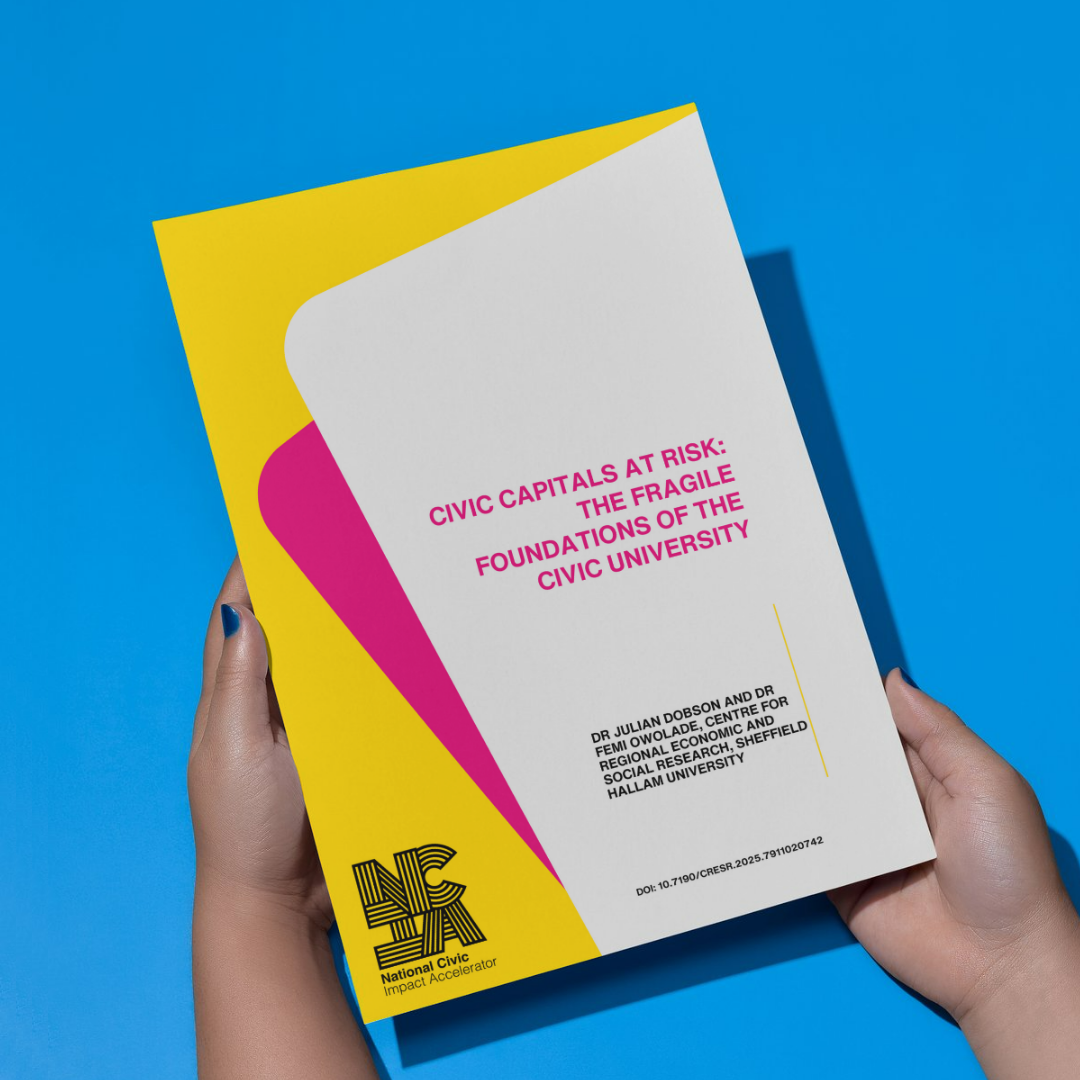
Civic capitals at risk: the fragile foundations of the civic university
Discover how UK universities’ civic roles are under threat, the importance of sustaining civic capitals, and the recommendations for leaders and policymakers to secure a thriving civic future.

Establishing Civic: Strategy and Practice
This report, drawn from the NCIA Action Learning Programme, provides actionable recommendations to build institutional alignment and maximise civic impact within higher education.
Explore Other Terrains
Select a terrain to uncover guidance, case studies, and tools for leading impactful civic work.
Place
The landscapes you traverse.

Purpose
Your North Star.
Process
The routes and rhythms.
Practice
The hands on equipment.

Policy
The navigational rules.
People
Your expedition crew.

Partnerships
The alliances you forge and strengthen along the trail.