




Incentives & Disincentives
How can universities navigate complex policy landscapes and contribute evidence-based insights?
This section of the Field Guide asks: what are the policy and funding mechanisms which enable or hold back civic activity?
Here, we examine how universities can review how their behaviour is shaped by these incentives and disincentives, how they can be strategically engaged, and how complex challenges need policy solutions informed by community insight.
Field Notes at a Glance
Distilled wisdom to guide your path across the terrain.



Foundational Waypoints
By stepping back and seeing evidence in the round, new insights emerge from the clouds.
Think of these waypoints as signposts, not instructions. They capture shared learning and practical insights to help you navigate your civic journey with confidence, at your own pace and from your own place.


 "How Civic Universities Support Government Missions" shows how universities are recognising and responding to policy priorities at different scales, from local needs to regional and national strategies. In particular, readers can learn how mapping institutional strengths to mission-led policy goals can open up new avenues for civic partnership.
Supporting Waypoints
Complementary insights that extend your understanding across the interconnected terrains of civic engagement.
These waypoints offer fresh perspectives to deepen and broaden your civic practice. They're here to complement your journey, giving you the space to explore connections, draw parallels, and engage with ideas that fit your own context.




Coming Soon Download
Take the Civic Field Guide with you!
A downloadable version of the guide is coming soon, designed for you to keep, refer to and share with colleagues.
Whether you're navigating new partnerships or refining existing ones, this portable edition will help you chart your civic journey with ease.


Expedition Debrief
Universities should seek to understand how policies at different scales interact and influence their civic work, using this knowledge to deepen and strengthen their work, access supportive funding streams, and advocate effectively for policy improvements that enable more impactful civic engagement.
 This multi-level approach involves developing authentic relationships with policy makers at different governmental levels whilst maintaining clear focus on how policy engagement serves civic mission and generates tangible community benefit through coordinated policy intervention across multiple scales.
The Policy terrain recognises that some civic challenges require coordinated policy responses across multiple governmental levels, with universities playing crucial bridging roles between local community needs and broader policy discussions through strategic understanding of policy incentives and barriers.
Universities should develop capabilities for translating community priorities into policy-relevant insights whilst simultaneously helping policy makers understand complex community challenges through rigorous evidence and analysis.
Strategic policy engagement requires universities to function as trusted, credible sources of evidence and analysis that contribute to democratic governance whilst remaining deeply connected to community priorities and lived experiences that inform policy development processes.

This approach positions universities as conveners who contribute rigorous scholarship whilst ensuring community perspectives effectively influence policy frameworks through systematic translation of academic research into accessible formats that serve both policy makers and community interests.
Universities maximise their policy impact by systematically leveraging research expertise, analytical capabilities, and extensive partnership networks to help policy makers understand complex community challenges and evaluate potential solutions based on robust evidence rather than assumption.
This can involve piloting innovative approaches that can inform policy development whilst maintaining authentic relationships with community partners who provide essential insights about lived experience and local implementation challenges that must inform effective policy design.
Essential Equipment
Like a compass and a map, you need the right tools to set you on the right path.
Our essential equipment will help you plan a route and weather any storms along the way.

Developing the Civic University Mission
Femi Owolade's research examines factors driving race equality changes in UK universities, aiming to provide insights for developing the civic university mission and addressing broader societal disparities.
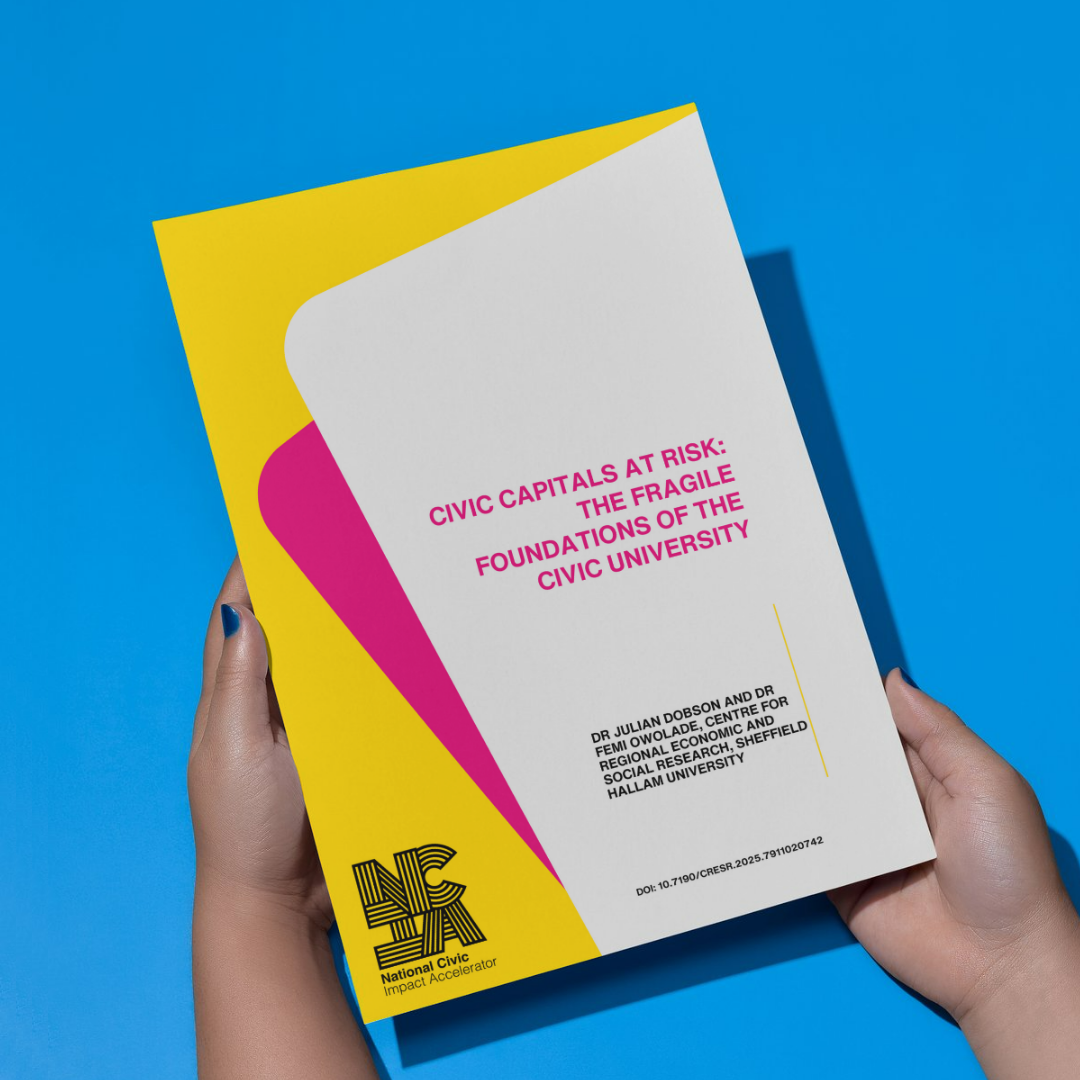
Civic capitals at risk: the fragile foundations of the civic university
Discover how UK universities’ civic roles are under threat, the importance of sustaining civic capitals, and the recommendations for leaders and policymakers to secure a thriving civic future.

NCIA Policy Roundtable Series
A series of reports capturing key findings from NCIA roundtables on civic universities’ roles in policy, devolution, and community partnerships, exploring how higher education institutions can drive local impact amidst major sector pressures.
Explore Other Terrains
Select a terrain to uncover guidance, case studies, and tools for leading impactful civic work.
Place
The landscapes you traverse.

Purpose
Your North Star.

Process
The routes and rhythms.

Practice
The hands on equipment.
Policy
The navigational rules.

People
Your expedition crew.

Partnerships
The alliances you forge and strengthen along the trail.