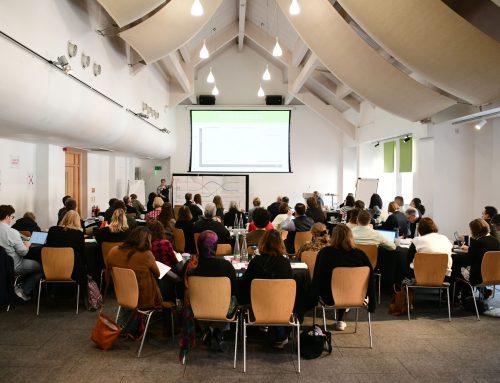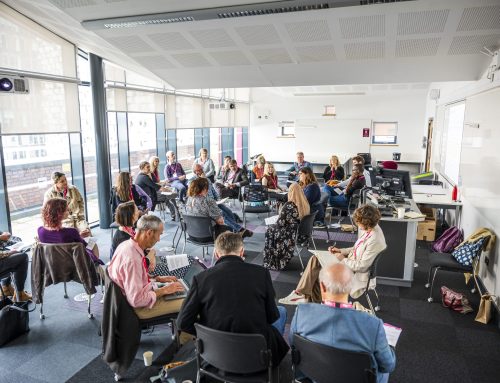

The National Coordinating Centre for Public Engagement, NCCPE, ran an action learning programme for the NCIA, bringing together 14 civic partnerships to think through how to do this sort of work. A clear piece of learning from the programme was the need to articulate the role of the 'connector' and how vital these people are to forming meaningful and effective civic partnerships. The NCCPE worked with David Owen, a freelance consultant, to build on the learning from the programme and develop a civic capabilities framework. We're pleased to share this framework with you and are keen to learn how it can be used to support civic practitioners.
What does it really mean to "do civic work" in higher education?
For years, universities have talked about civic engagement as part of their mission; connecting with communities, tackling place-based challenges, and creating public value. But when you look at the people making this happen, their roles are often a bit blurry: it requires knowledge of research, teaching, and university processes. They're the connectors, the bridge-builders, the people who make collaboration possible. And yet, how often do we see that work clearly described in job descriptions, career pathways, or performance reviews?
This is where the Civic Capabilities Framework comes in. It's not just another competency list. It's a way of naming and valuing the knowledge, skills, and attributes that underpin civic activity e.g. strategic thinking, knowledge mobilisation, and relationship building, alongside attributes such as empathy, resilience, and authenticity. These are the invisible threads that hold partnerships together and make civic ambitions real.

Action Learning Programme event, March 2025
Why does this matter now?
Universities are expected to demonstrate impact, not just in research outputs, but in how they contribute to society. Yet the people doing this work often struggle to articulate their contribution. They know they're making a difference, but how do you evidence "building trust" or "creating alignment"? The framework offers language and structure to make this visible. It helps individuals show progression, from emerging to modelling, and gives institutions a way to recognise this progression.
How could you use it?
Think about the gaps you've seen. Job descriptions that say "engagement" but don't explain what that means. Promotion cases where civic work feels like an add-on rather than a core contribution. Development conversations that focus on technical skills but ignore relational ones. The framework can help address all of these:
- Role design: Use the framework to develop roles that reflect the complexity of civic work. Instead of vague phrases, include capabilities like "advocacy and influencing" or "evaluation and learning."
- Impact evidence: The development matrix offers progression indicators that can be used in appraisals or promotion cases. It's a way to show growth and impact beyond outputs.
- Professional development: Treat the framework as a reflective tool. Where are you now? How do you want to develop?
- Shared language: Civic work can often be misunderstood. This framework gives us words to describe what good looks like and why it matters.
A bigger question for the sector
What would change if we took this seriously? If civic capabilities were embedded in HR frameworks, if career pathways recognised this work, if training and mentoring supported it? We'd move beyond seeing civic engagement as "extra" and start treating it as core to the university's purpose.
Download the Civic Capabilities Framework and start the conversation. How might you use it in your institution? To shape roles? To support development? To make hidden work visible?
The National Coordinating Centre for Public Engagement, NCCPE, ran an action learning programme for the NCIA, bringing together 14 civic partnerships to think through how to do this sort of work. A clear piece of learning from the programme was the need to articulate the role of the 'connector' and how vital these people are to forming meaningful and effective civic partnerships. The NCCPE worked with David Owen, a freelance consultant, to build on the learning from the programme and develop a civic capabilities framework. We're pleased to share this framework with you and are keen to learn how it can be used to support civic practitioners.
What does it really mean to "do civic work" in higher education?
For years, universities have talked about civic engagement as part of their mission; connecting with communities, tackling place-based challenges, and creating public value. But when you look at the people making this happen, their roles are often a bit blurry: it requires knowledge of research, teaching, and university processes. They're the connectors, the bridge-builders, the people who make collaboration possible. And yet, how often do we see that work clearly described in job descriptions, career pathways, or performance reviews?
This is where the Civic Capabilities Framework comes in. It's not just another competency list. It's a way of naming and valuing the knowledge, skills, and attributes that underpin civic activity e.g. strategic thinking, knowledge mobilisation, and relationship building, alongside attributes such as empathy, resilience, and authenticity. These are the invisible threads that hold partnerships together and make civic ambitions real.
Action Learning Programme event, March 2025
Why does this matter now?
Universities are expected to demonstrate impact, not just in research outputs, but in how they contribute to society. Yet the people doing this work often struggle to articulate their contribution. They know they're making a difference, but how do you evidence "building trust" or "creating alignment"? The framework offers language and structure to make this visible. It helps individuals show progression, from emerging to modelling, and gives institutions a way to recognise this progression.
How could you use it?
Think about the gaps you've seen. Job descriptions that say "engagement" but don't explain what that means. Promotion cases where civic work feels like an add-on rather than a core contribution. Development conversations that focus on technical skills but ignore relational ones. The framework can help address all of these:
- Role design: Use the framework to develop roles that reflect the complexity of civic work. Instead of vague phrases, include capabilities like "advocacy and influencing" or "evaluation and learning."
- Impact evidence: The development matrix offers progression indicators that can be used in appraisals or promotion cases. It's a way to show growth and impact beyond outputs.
- Professional development: Treat the framework as a reflective tool. Where are you now? How do you want to develop?
- Shared language: Civic work can often be misunderstood. This framework gives us words to describe what good looks like and why it matters.
A bigger question for the sector
What would change if we took this seriously? If civic capabilities were embedded in HR frameworks, if career pathways recognised this work, if training and mentoring supported it? We'd move beyond seeing civic engagement as "extra" and start treating it as core to the university's purpose.
Download the Civic Capabilities Framework and start the conversation. How might you use it in your institution? To shape roles? To support development? To make hidden work visible?