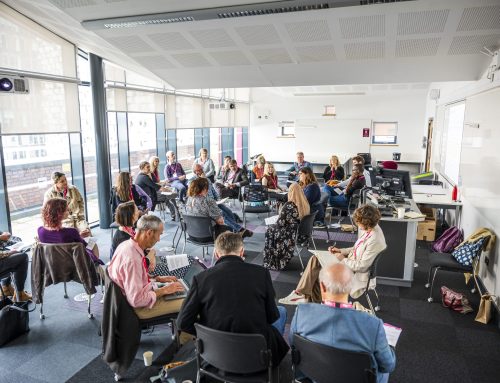

From September 2023 to April 2025 the NCCPE brought together 14 university-led civic partnerships from across England to take part in an action learning programme for the National Civic Impact Accelerator. The programme explored how civic engagement can be strengthened, sustained, and embedded within higher education institutions. We're pleased to be launching our final report: Establishing Civic: Strategy and Practice.
This report is more than a summary of activities, it's a testament to the resilience, creativity, and commitment of civic practitioners working in a time of significant challenge for the sector. It captures the journeys of individuals and partnerships who have worked to define, legitimise, and embed civic activity in their institutions and communities.
Universities are increasingly being called upon to demonstrate their civic value, to show how they contribute to the wellbeing of their places and people. But civic engagement is complex, relational, and often under-recognised and resourced. This report offers a framework for understanding and strengthening civic work, built around four challenges:
- Purpose: Framing civic activity as a pathway to public benefit.
- Process: Embedding civic practice into organisational culture and systems.
- People: Recognising the relational and identity-based nature of civic work.
- Place: Understanding civic engagement as place-based and power-aware.
Each perspective offers practical insights and recommendations for university leaders, civic practitioners, community partners, and policymakers.

What We've Learned
The Action Learning Programme created a reflective space for participants to share challenges, test ideas, and build confidence. Through peer learning and collaborative inquiry, participants:
- Developed clearer narratives to articulate the value of civic work.
- Piloted innovative approaches, from community-engaged learning to civic fellowships.
- Strengthened relationships with local partners and built new networks.
- Began to embed civic activity into institutional strategies and governance.
Importantly, the programme highlighted the need for sustained investment, strategic alignment, and recognition of civic roles, much of this work is done in the margins of existing toles and relies on good will.
Looking Ahead
The launch of the report is timely, with the new Post-16 Education and Skills White Paper calling on all universities to develop civic plans that align with their strengths and priorities.
The report concludes with a set of tailored recommendations which will help us deliver on this expectation, calling for:
- National frameworks to support the evaluation of civic impact.
- Institutional structures to support and reward civic work.
- Peer networks and resourced 'connector roles' to sustain momentum.
- Inclusive, co-created strategies that reflect the complexity of place.
As we share this report with the sector, we invite you to reflect on your own civic journey. Whether you're a university leader, a community partner, or a civic practitioner, we hope the insights and stories within this report resonate with your experience and inspire further action.
From September 2023 to April 2025 the NCCPE brought together 14 university-led civic partnerships from across England to take part in an action learning programme for the National Civic Impact Accelerator. The programme explored how civic engagement can be strengthened, sustained, and embedded within higher education institutions. We're pleased to be launching our final report: Establishing Civic: Strategy and Practice.
This report is more than a summary of activities, it's a testament to the resilience, creativity, and commitment of civic practitioners working in a time of significant challenge for the sector. It captures the journeys of individuals and partnerships who have worked to define, legitimise, and embed civic activity in their institutions and communities.
Universities are increasingly being called upon to demonstrate their civic value, to show how they contribute to the wellbeing of their places and people. But civic engagement is complex, relational, and often under-recognised and resourced. This report offers a framework for understanding and strengthening civic work, built around four challenges:
- Purpose: Framing civic activity as a pathway to public benefit.
- Process: Embedding civic practice into organisational culture and systems.
- People: Recognising the relational and identity-based nature of civic work.
- Place: Understanding civic engagement as place-based and power-aware.
Each perspective offers practical insights and recommendations for university leaders, civic practitioners, community partners, and policymakers.
What We've Learned
The Action Learning Programme created a reflective space for participants to share challenges, test ideas, and build confidence. Through peer learning and collaborative inquiry, participants:
- Developed clearer narratives to articulate the value of civic work.
- Piloted innovative approaches, from community-engaged learning to civic fellowships.
- Strengthened relationships with local partners and built new networks.
- Began to embed civic activity into institutional strategies and governance.
Importantly, the programme highlighted the need for sustained investment, strategic alignment, and recognition of civic roles, much of this work is done in the margins of existing toles and relies on good will.
Looking Ahead
The launch of the report is timely, with the new Post-16 Education and Skills White Paper calling on all universities to develop civic plans that align with their strengths and priorities.
The report concludes with a set of tailored recommendations which will help us deliver on this expectation, calling for:
- National frameworks to support the evaluation of civic impact.
- Institutional structures to support and reward civic work.
- Peer networks and resourced 'connector roles' to sustain momentum.
- Inclusive, co-created strategies that reflect the complexity of place.
As we share this report with the sector, we invite you to reflect on your own civic journey. Whether you're a university leader, a community partner, or a civic practitioner, we hope the insights and stories within this report resonate with your experience and inspire further action.