

Civic university teams are full of optimists. They're connectors, listeners, initiators. They're people who make things happen, often under the radar and unrewarded.
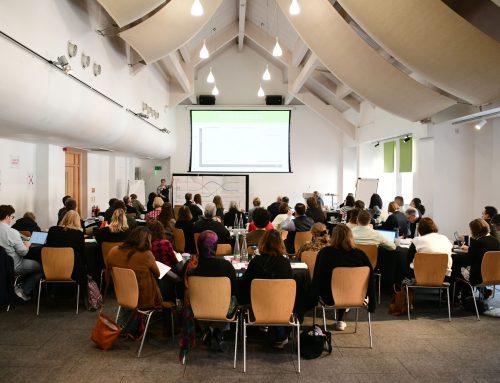
Civic university teams need to be full of optimists because they're under intense pressure and their future is far from certain. In recent weeks the NCIA hosted three focus group discussions, involving 25 participants from 21 different institutions, to look at the challenges of resourcing in the light of the financial crisis facing universities in the UK.
"When individuals are lost to an organisation, especially when they're people who fulfil what's often described as a 'connector' role, the knowledge and relationships they've built up usually go with them."
Using postcards featuring the covers of old Pelican books as prompts, we invited participants to reflect on their own work and the civic role of their institutions. One of the more striking contributions was from someone who picked The Life of the Robin.
'Like a robin civic work is small but mighty, and I know that across the university sector civic resources and teams are often very small but impact can be mighty if you know how to articulate it in the right way and if you're engaged with communities in the right way based on need rather than assumptions,' they said.
Robins are considered cheerful and friendly, but they're also resilient – and they know their territory. But while robins might be doing well in our gardens, our civic university teams are feeling the strain. Reflecting the continuing shake-up of universities, especially on the professional services side, two of the participants who signed up for the focus groups were no longer in post by the time they took place.
When individuals are lost to an organisation, especially when they're people who fulfil what's often described as a 'connector' role, the knowledge and relationships they've built up usually go with them. Some participants described how their institution's civic work had to be put on pause when they took a career break because nobody else knew what to do or who to speak to.
When universities are restructured or reprioritise resources, relationships with community partners can be significantly damaged: examples have shown how decisions around resource allocation and strategic priorities can impact partnerships and potentially affect an institution's standing with local stakeholders.
Several spoke of their dependence on short-term funding (especially through HEIF) and uncertainty about the future of their roles. This uncertainty can sap the confidence of partners in local government, health or community organisations, who begin to doubt universities' sincerity about delivering on their rhetoric.
Participants in the focus groups were well aware of the challenges facing universities and weren't asking for special treatment. But many felt their work was not fully understood and was undervalued within their institutions.
However, they were also remarkably optimistic about potential opportunities. Whilst this varies across the country, many felt devolution policy in England provided an important focus for building new relationships with local government.
Several felt that current financial challenges provided an opportunity to focus and prioritise, rather than trying to be all things to all people. Others commented on the power of compelling case studies or stories of change, and stressed the need for an institution-wide narrative of the civic difference a university and its partners want to make.
The coming months will put that optimism to the test. How civic activities develop over the next couple of academic years may set the tone for a long time to come.
A full report of our work on resourcing universities' civic activities is due to be published at the end of April.
Civic university teams are full of optimists. They're connectors, listeners, initiators. They're people who make things happen, often under the radar and unrewarded.
Civic university teams need to be full of optimists because they're under intense pressure and their future is far from certain. In recent weeks the NCIA hosted three focus group discussions, involving 25 participants from 21 different institutions, to look at the challenges of resourcing in the light of the financial crisis facing universities in the UK.
"When individuals are lost to an organisation, especially when they're people who fulfil what's often described as a 'connector' role, the knowledge and relationships they've built up usually go with them."
Using postcards featuring the covers of old Pelican books as prompts, we invited participants to reflect on their own work and the civic role of their institutions. One of the more striking contributions was from someone who picked The Life of the Robin.
'Like a robin civic work is small but mighty, and I know that across the university sector civic resources and teams are often very small but impact can be mighty if you know how to articulate it in the right way and if you're engaged with communities in the right way based on need rather than assumptions,' they said.
Robins are considered cheerful and friendly, but they're also resilient – and they know their territory. But while robins might be doing well in our gardens, our civic university teams are feeling the strain. Reflecting the continuing shake-up of universities, especially on the professional services side, two of the participants who signed up for the focus groups were no longer in post by the time they took place.
When individuals are lost to an organisation, especially when they're people who fulfil what's often described as a 'connector' role, the knowledge and relationships they've built up usually go with them. Some participants described how their institution's civic work had to be put on pause when they took a career break because nobody else knew what to do or who to speak to.
When universities are restructured or reprioritise resources, relationships with community partners can be significantly damaged: examples have shown how decisions around resource allocation and strategic priorities can impact partnerships and potentially affect an institution's standing with local stakeholders.
Several spoke of their dependence on short-term funding (especially through HEIF) and uncertainty about the future of their roles. This uncertainty can sap the confidence of partners in local government, health or community organisations, who begin to doubt universities' sincerity about delivering on their rhetoric.
Participants in the focus groups were well aware of the challenges facing universities and weren't asking for special treatment. But many felt their work was not fully understood and was undervalued within their institutions.
However, they were also remarkably optimistic about potential opportunities. Whilst this varies across the country, many felt devolution policy in England provided an important focus for building new relationships with local government.
Several felt that current financial challenges provided an opportunity to focus and prioritise, rather than trying to be all things to all people. Others commented on the power of compelling case studies or stories of change, and stressed the need for an institution-wide narrative of the civic difference a university and its partners want to make.
The coming months will put that optimism to the test. How civic activities develop over the next couple of academic years may set the tone for a long time to come.
A full report of our work on resourcing universities' civic activities is due to be published at the end of April.